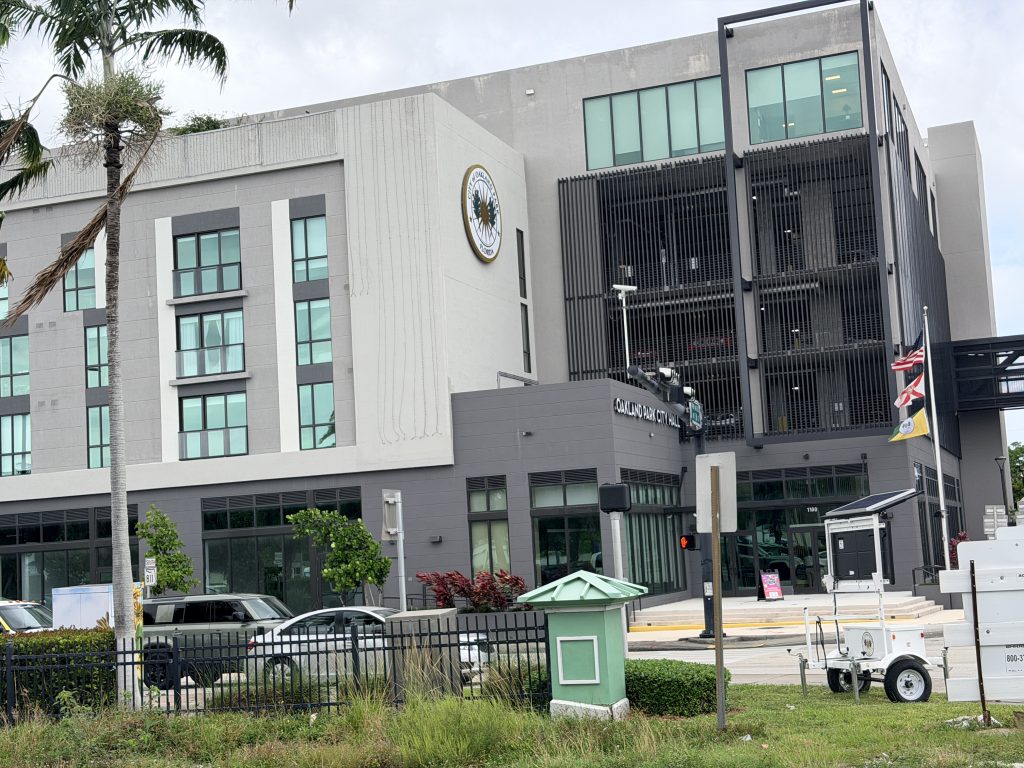
Oakland Park has a fascinating history tied to South Florida’s early land boom, hurricanes, farming communities, and later urban redevelopment.
Early Settlement (1900s–1920s)
The area that became Oakland Park was first settled around 1901 by farming families, including the Whitby family from Georgia. The land near the Middle River was known for its large oak trees, fertile soil, and ranchland.
During Florida’s massive real estate boom of the 1920s, developers envisioned a luxury resort community called Floranada — a combination of “Florida” and “Canada.” The planned city was enormous, stretching from the Atlantic Ocean west toward today’s U.S. 441. Plans included golf courses, polo fields, yacht clubs, and upscale neighborhoods meant to rival Palm Beach.
The 1926 Hurricane and Rebirth
The devastating 1926 Miami Hurricane and the collapse of the Florida land boom ruined the Floranada development project. Investors pulled out, leaving local residents with an oversized municipality and almost no financial resources.
On July 1, 1929, Floranada was dissolved and reincorporated as Oakland Park. The new name honored the large oak trees lining the Middle River area.
Farming Town Years
For many years, Oakland Park was a small agricultural community made up of farmers and ranchers. Dixie Highway served as the town’s main commercial corridor. The community revolved around local churches, schools, and small businesses.
One of the city’s most historic landmarks is Oakland Park Elementary School, which opened in 1925 and is considered Broward County’s oldest continuously operating school. The school is listed on the National Register of Historic Places.
Growth After World War II
In the 1950s through the 1970s, Broward County experienced explosive suburban growth. Oakland Park evolved from a rural town into a residential, commercial, and industrial hub connected closely to nearby Fort Lauderdale and Wilton Manors.
Major roads like Oakland Park Boulevard and Interstate 95 accelerated development and made the city more accessible across Broward County.